Shopify vs Magento Performance: Choosing the Right eCommerce Development Partner
Running a successful online store requires more than an attractive website. Customers expect fast loading pages, smooth navigation, secure checkout, and a seamless shopping experience on every device. Even a small delay can reduce conversions, increase cart abandonment, and negatively impact search engine rankings.
Whether you’re launching a new online business or scaling an established brand, working with an experienced shopify development company can help you build a high-performing store that meets customer expectations. At the same time, businesses already using Magento often need expert support for magento performance optimization to ensure their stores remain fast, stable, and scalable.
This guide explains the common performance challenges in eCommerce and how professional development services can solve them.
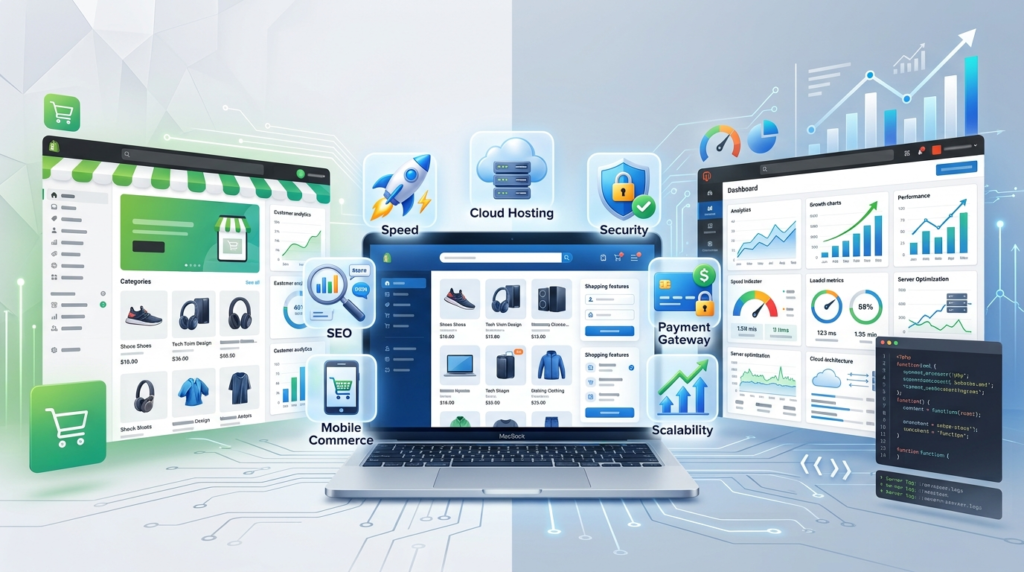
Why Website Performance Matters
Online shoppers have little patience for slow websites. Studies consistently show that page speed directly affects customer satisfaction and revenue.
A fast eCommerce website offers several benefits:
- Better user experience
- Higher conversion rates
- Improved search engine visibility
- Lower bounce rates
- Increased customer trust
- Better mobile performance
Performance becomes even more important during seasonal promotions, product launches, and holiday shopping when traffic spikes significantly.
Common Challenges in eCommerce Stores
As online businesses grow, websites become more complex. New products, third-party integrations, marketing tools, and custom features can gradually slow down performance.
Some of the most common issues include:
- Slow page loading
- Poor mobile responsiveness
- Heavy images and media files
- Inefficient database queries
- Unoptimized extensions
- Checkout delays
- Server resource limitations
- Poor caching configuration
Without proper optimization, these issues can negatively affect both customer experience and business growth.
When to Choose Shopify
Shopify is a popular cloud-based eCommerce platform known for its ease of use, reliability, and quick deployment.
Businesses often choose Shopify because it offers:
- Simple store management
- Secure hosting
- Automatic updates
- Built-in payment options
- Mobile-friendly themes
- Large app ecosystem
However, building a professional Shopify store still requires technical expertise. An experienced shopify development company can customize themes, integrate business systems, optimize speed, and create unique shopping experiences that match brand requirements.
Professional developers also help businesses avoid common mistakes that may affect long-term scalability.
Magento: Built for Complex eCommerce
Magento (Adobe Commerce) is designed for businesses that need advanced customization and enterprise-level functionality.
Magento provides:
- Flexible architecture
- Multi-store management
- Advanced product catalogs
- Custom pricing rules
- Powerful inventory management
- Extensive API integrations
Because Magento offers greater flexibility, it also requires proper technical management to maintain excellent performance.
Understanding Magento Performance
Store speed depends on many technical factors working together. Poor configuration in just one area can affect the entire customer experience.
Key elements of strong magento performance include:
Optimized Hosting Environment
Choosing the right server infrastructure is the foundation of a fast Magento store. Modern cloud hosting, proper PHP versions, and sufficient server resources all contribute to better performance.
Effective Caching
Magento supports multiple caching layers that reduce server workload and deliver pages much faster.
Proper caching includes:
- Full-page cache
- Redis
- Varnish
- Browser caching
Correct implementation significantly improves page speed.
Database Optimization
Large product catalogs generate extensive database activity. Regular optimization helps reduce query times and keeps the store responsive.
Database maintenance includes:
- Removing unnecessary logs
- Index optimization
- Query improvements
- Scheduled maintenance
Image Optimization
High-quality product images are important, but oversized files slow websites considerably.
Developers improve performance through:
- Modern image formats
- Lazy loading
- Compression
- Responsive image delivery
Extension Management
Many Magento stores install dozens of third-party extensions.
While useful, unnecessary or poorly coded extensions often become the biggest source of slow performance.
Professional developers regularly audit installed modules and remove conflicts that impact store speed.
Signs Your Store Needs Performance Optimization
Many businesses overlook performance problems until revenue begins to decline.
Common warning signs include:
- Pages taking more than three seconds to load
- Slow product searches
- Checkout abandonment
- Poor Core Web Vitals scores
- Increased server errors
- Slow admin dashboard
- Reduced organic traffic
Addressing these issues early helps maintain customer satisfaction and business growth.
Best Practices for High-Performance eCommerce Stores
Regardless of platform, several best practices consistently improve online store performance.
Keep Themes Lightweight
Avoid unnecessary animations and excessive scripts that increase loading time.
Optimize Third-Party Apps
Install only essential integrations and regularly review whether they continue adding value.
Monitor Website Performance
Use monitoring tools to identify slow pages before customers notice problems.
Update Software Regularly
Platform updates often include important security patches and performance improvements.
Test Before Deployment
Every new feature should be tested carefully to ensure it doesn’t introduce performance bottlenecks.
Scaling Your Online Business
As businesses expand, technical requirements become more demanding.
Growth often introduces:
- Larger product catalogs
- More customer accounts
- International stores
- Multiple currencies
- Higher traffic volumes
- Advanced marketing integrations
Professional developers design scalable solutions that support future expansion without sacrificing performance.
Why Expert Development Matters
Building an eCommerce website involves much more than installing a platform.
Experienced developers help with:
- Platform selection
- Custom development
- Store migration
- API integrations
- Performance optimization
- Security improvements
- Ongoing maintenance
Their expertise reduces technical risks while improving long-term reliability.
Amasty’s eCommerce Development Expertise
Amasty has extensive experience delivering professional eCommerce solutions for businesses of various sizes. The company works with both Magento and Shopify, helping merchants build scalable online stores while maintaining excellent performance, usability, and security.
Its development services cover store customization, migration, extension development, integrations, ongoing maintenance, and performance optimization. By following modern development standards and industry best practices, Amasty helps businesses create online stores that are prepared for long-term growth and changing customer expectations.
Conclusion
Choosing the right eCommerce platform is only the first step toward building a successful online business. Long-term success depends on website speed, scalability, security, and a seamless customer experience.
Working with an experienced shopify development company allows businesses to create customized Shopify stores that support growth and improve user satisfaction. Meanwhile, investing in magento performance optimization ensures Magento stores continue delivering fast, reliable shopping experiences even as traffic and product catalogs expand.
With the right technical expertise and ongoing optimization, businesses can provide customers with a smoother shopping journey while positioning themselves for sustainable eCommerce success.